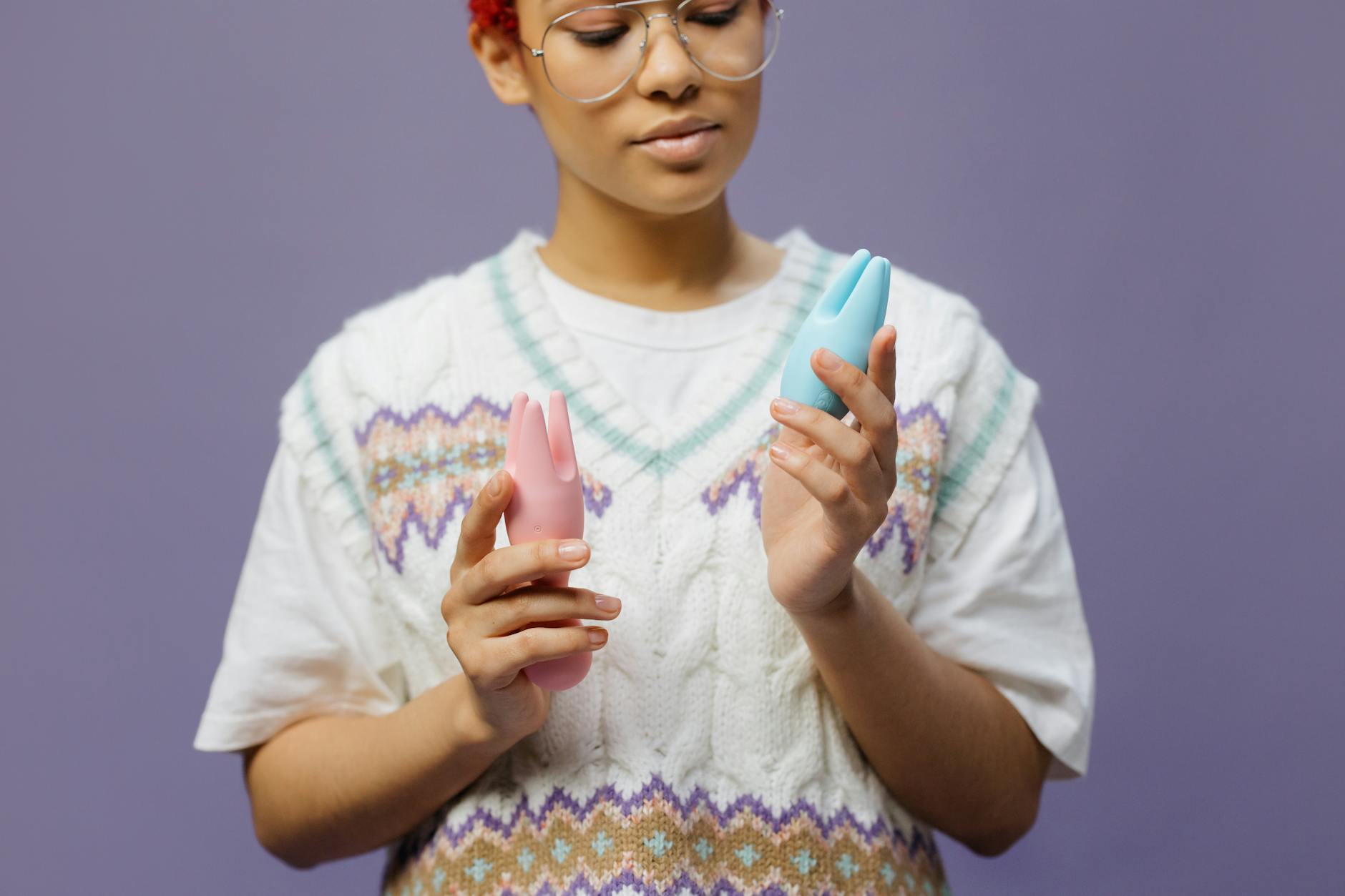
Why Lemon Vibrators Feel Better After Menopause: What Changes and Why
Let's be real. Menopause changes how your body responds to pleasure. It's not a myth, and it's not something you just power through. But here's what nobody tells you clearly: the changes are specific, predictable, and totally workable once you understand what's actually happening.
I've worked with hundreds of women navigating this transition, and the pattern is consistent. The ones who adapt their approach to pleasure don't lose it. They often find it gets better.
What actually happens to your body after menopause
Estrogen drops. This is the core shift. That drop changes tissue thickness in the vulva and vagina, reduces natural lubrication, and affects how quickly blood flows to the clitoris when you're aroused. Testosterone also decreases (yes, people with ovaries produce testosterone, and it matters for desire). The pelvic floor loses some of its estrogen-dependent support.
But here's the twist: the clitoris itself doesn't change. The nerve endings that create pleasure don't disappear. Your brain's capacity for arousal stays intact. What changes is the mechanics, not the capability.
Many women tell me their orgasms feel different after menopause. Sometimes shallower. Sometimes more concentrated. And often, surprisingly, more intense because the pressure changes feel novel.
Why air-suction vibrators work differently on post-menopausal tissue
This is where lemon vibrators enter the conversation. Traditional vibrators work through direct vibration against tissue. For post-menopausal bodies, this can feel too intense or even uncomfortable on thinner, more sensitive tissue.
Lemon clitoral vibrators use air-suction technology. Instead of vibration, they create gentle pulses of suction that stimulate the clitoris from slightly above the surface. This matters because you get deep nerve stimulation without the mechanical friction that can aggravate sensitive tissue.
The suction pattern also means you don't need the same amount of direct pressure to feel pleasure. Post-menopausal bodies often respond better to this approach. You're stimulating the same nerves, but with a different mechanism, which translates to more comfort and often stronger sensation.
Three physical reasons lemon vibrators feel gentler
First, the suction distributes pressure more evenly across the clitoral area instead of concentrating it in one spot. With thinning tissue, even pressure distribution matters.
Second, lemon vibrators don't require your body to produce lubrication at the same rate. Traditional vibrators need more natural wetness to reduce friction. Suction-based stimulation works whether you're naturally lubricated or not, which means less reliance on a physiological process that slows after menopause.
Third, the suction creates a gentle seal that can feel psychologically grounding. Many post-menopausal women describe this as feeling safer, more contained, and less vulnerable than the exposed sensation of traditional vibration.
Why arousal takes longer (and how lemon vibrators help)
After menopause, arousal typically needs more time to build. Blood flow to the clitoris happens more slowly. Your body isn't cycling through hormonal fluctuations that used to prime you for sex.
This doesn't mean you can't get aroused. It means you need patience and the right tool. Lemon vibrators are particularly effective because their suction creates sensation that accumulates. You feel the effect immediately even if your arousal is still ramping up, which provides feedback to your brain that pleasure is possible. That feedback loop often accelerates actual arousal.
Most women I work with find that starting with the lower settings of a lemon clitoral vibrator on settings 1 or 2, then gradually moving up, creates the gradual building block that post-menopausal bodies need. Traditional vibrators often feel too intense at lower settings, which can frustrate the process.
The lubrication conversation (without the shame)
Yes, lubrication matters after menopause. No, this doesn't mean anything is wrong with you. It means your tissue has less estrogen, which is a biological fact, not a personal failure.
Water-based lubricant works well with lemon vibrators and doesn't damage the silicone. Many women find that adding lubricant transforms the experience from tolerable to genuinely pleasurable. The suction technology of a lemon vibrator means lubrication works even more effectively than with traditional toys because the seal is tighter and more of the lubricant stays in the stimulated area.
The frame shift here is important: lubrication isn't a crutch. It's information. Your body is telling you it needs extra support. That support makes pleasure accessible.
What changes and what doesn't after menopause
Your capacity for pleasure doesn't change. Your desire might shift, but that's often less about menopause and more about the other life stuff happening at the same time. Career stress, relationship dynamics, grief, identity shifts. Menopause is real, but it's not a solo cause.
What stays: the clitoral nerve density, your ability to have orgasms (often intense ones), the basic architecture of arousal in your brain.
What changes: the timeline for arousal, the amount of natural lubrication, the comfort level with direct intense stimulation.
Once you know what to expect, you can adapt. And adapting often means better pleasure than you had before because you're working with your body instead of against it.
The mental piece (it's bigger than the physical part)
Here's what I see clinically that matters more than the physical changes: menopause often comes with psychological freedom. The decades-long vigilance about fertility, pregnancy prevention, hormonal cycling. It lifts.
Many women tell me that post-menopause, they finally explore pleasure for pleasure's sake instead of performing for a partner or managing risk. That mental shift is massive. A lemon vibrator becomes a tool for something new rather than a compensation for loss.
If you're in a partnership, this transition is worth discussing explicitly. "My body responds differently now" is different from "I need to reconnect with myself." Both might be true. Separating them means you don't turn physical changes into relationship problems.
When to see a specialist
If sex hurts consistently, don't wait. Genitourinary syndrome of menopause is real, treatable, and common. Topical estrogen creams work quickly and have minimal systemic absorption. A menopause-informed GP can help.
If desire has completely flatlined and isn't returning with time or approach changes, consider talking to a specialist about testosterone therapy. It's prescribed conservatively in some regions, but it works for the right person.
Most post-menopausal shifts in pleasure don't require medical intervention. They require information, patience, and the right tool. A lemon clitoral vibrator often bridges that gap.
Getting started with a lemon vibrator after menopause
Start with the Lemon on settings 1 or 2. Give your body time to respond. Budget 15 to 25 minutes instead of the rushed 5. This isn't laziness; it's working with your body's actual timeline.
Use water-based lubricant. Apply it to both the vibrator and your vulva. The suction seal works better with adequate lubrication.
Try different patterns. The Lemon has multiple suction intensities. Post-menopausal bodies often prefer mid-range settings more than the intensity extremes.
Don't judge the experience against pre-menopause pleasure. You're not trying to recreate something. You're discovering something new.
The reframe
Menopause is not the end of pleasure. It's a recalibration. Your body is still capable of sensation, arousal, and orgasm. The mechanics change. The potential doesn't.
Lemon vibrators exist partly because post-menopausal bodies have specific needs that traditional toys don't address. They're not compensation. They're designed engineering for how your body actually works now.
That's not settling. That's optimization.
FAQ: Common questions about lemon vibrators and menopause
Will a lemon vibrator feel the same after menopause as it did before?
Likely not, and that's fine. Your body has changed. The suction technology of a lemon clitoral vibrator works differently on post-menopausal tissue. Many women find the sensation is actually better because the suction distributes pressure more gently, reducing the intensity overload some feel with traditional vibrators. The experience might feel less intense but more pleasurable.
Do I need lubricant with a lemon vibrator after menopause?
Yes, typically. Post-menopausal tissue produces less natural lubrication. Water-based lubricant makes the suction seal more effective and reduces any friction. Applying lubricant isn't a sign of dysfunction; it's basic support for how your body works now. The suction technology of lemon vibrators actually works more efficiently with adequate lubrication because the seal is tighter.
How long should arousal take after menopause, and will a lemon vibrator help speed it up?
Aroustal typically takes longer after menopause, sometimes 15 to 25 minutes instead of 5 to 10. A lemon vibrator can help because suction-based stimulation creates immediate sensation even while your arousal is building, which provides your brain with feedback that pleasure is possible. This feedback loop often accelerates the arousal process itself. The immediate sensation matters psychologically and physiologically.
Are lemon vibrators too intense for post-menopausal bodies?
Not if you start low. The Lemon has multiple settings. Most post-menopausal users find settings 1 to 3 are ideal starting points, then gradually increase intensity. Because suction distributes pressure differently than traditional vibration, even higher settings often feel gentler on sensitive post-menopausal tissue than you might expect from a different toy.
What if I'm not interested in sex after menopause? Is this about the vibrator, or something else?
Likely something else. Menopause changes desire sometimes, but it rarely eliminates it entirely. More often, low desire after menopause connects to relationship dynamics, stress, identity shifts, or other life changes happening simultaneously. A lemon vibrator can help if reduced sensation is the issue, but if desire itself has disappeared, that's worth discussing with a therapist or a menopause-informed healthcare provider. The tool isn't the solution if the problem is deeper.
Will using a lemon vibrator reduce my natural arousal response further?
No. Using a vibrator doesn't reduce your body's natural capacity for pleasure. It's a tool that works with your current physiology, not against it. Many women find that exploring pleasure with a lemon vibrator actually increases their overall arousal capacity because they're not fighting their body's timeline or experiencing discomfort.
Your pleasure after menopause is not collateral damage. It's a different chapter. And with the right information and the right tool, it's often the best one yet.