
The real talk about birth control and sensation
Honestly though: plenty of people notice that their hormonal birth control makes orgasms harder to reach, arousal slower to build, or sensation just.flat. This isn't in your head. Hormonal contraceptives alter estrogen and progesterone levels, which directly impact blood flow to the genitals, neurotransmitter production, and desire itself. For some people, the trade-off is worth it. For others, it means rethinking how they approach pleasure entirely.
The good news? It's not permanent, and it's not unsolvable. Using a clitoral vibrator like the Lemon Vibrator when you're on birth control is actually more effective than most people realize, but you have to adapt your approach. The sensitivity is still there. You just need to know where to look for it.
Why birth control mutes sensation
Here's what happens: hormonal birth control suppresses ovulation by lowering natural estrogen fluctuations. Estrogen drives genital blood flow, tissue thickness, and nerve sensitivity. When it dips, blood doesn't reach the clitoris as quickly, lubrication decreases, and the tissue loses some of its responsiveness to touch. Progesterone, too, can flatten mood and desire by influencing dopamine and serotonin production. Put those two together and you've got a body that needs more input to feel the same amount of pleasure.
This isn't a failure. It's mechanics. And mechanics can be worked with.
Finding your responsive windows
Your hormones don't stay flat across the whole month, even on birth control. There's typically a slight dip in the placebo week (if you take a break) or the inactive pills, where a tiny surge of natural hormones can return. Some people with clitoral vibrators report sharper sensation during that window.
Pay attention. Track when sensation feels sharpest or when arousal builds fastest. It might be the three to four days before your placebo week, or it might be random. Everyone's chemistry is different. Once you identify your own responsive window, plan solo exploration during that time. You're not fighting your body. You're working with what it's giving you.
The Lemon Vibrator technique for reduced sensation
When sensation is muted, intensity matters. Here's how to use your Lemon clitoral vibrator strategically.
Start at pattern 4 or 5, not pattern 1. With lower base sensitivity, gentler patterns won't register. You need enough stimulation to overcome the sensation gap. This isn't about harming yourself. It's about matching the intensity to what your nervous system can actually feel. The Lemon Vibrator's graduated patterns mean you can dial it up without going reckless.
Build arousal first, then introduce the toy. Don't jump straight to the vibrator. Spend 10 to 15 minutes warming up your body. Touch your breasts, your inner thighs, your labia without any toy. Your brain's arousal circuits need time to fire up, especially when hormones are working against you. This primes your nervous system so that when you bring the Lemon Vibrator in, sensation hits differently.
Use the suction function consistently. The Lemon Vibrator's suction stimulates nerves without relying on direct friction alone. Friction can feel muffled when sensation is reduced, but suction bypasses that problem. It creates a different kind of stimulation that often registers even when arousal is sluggish. Let it work for two to three minutes at a higher intensity before lowering the pattern.
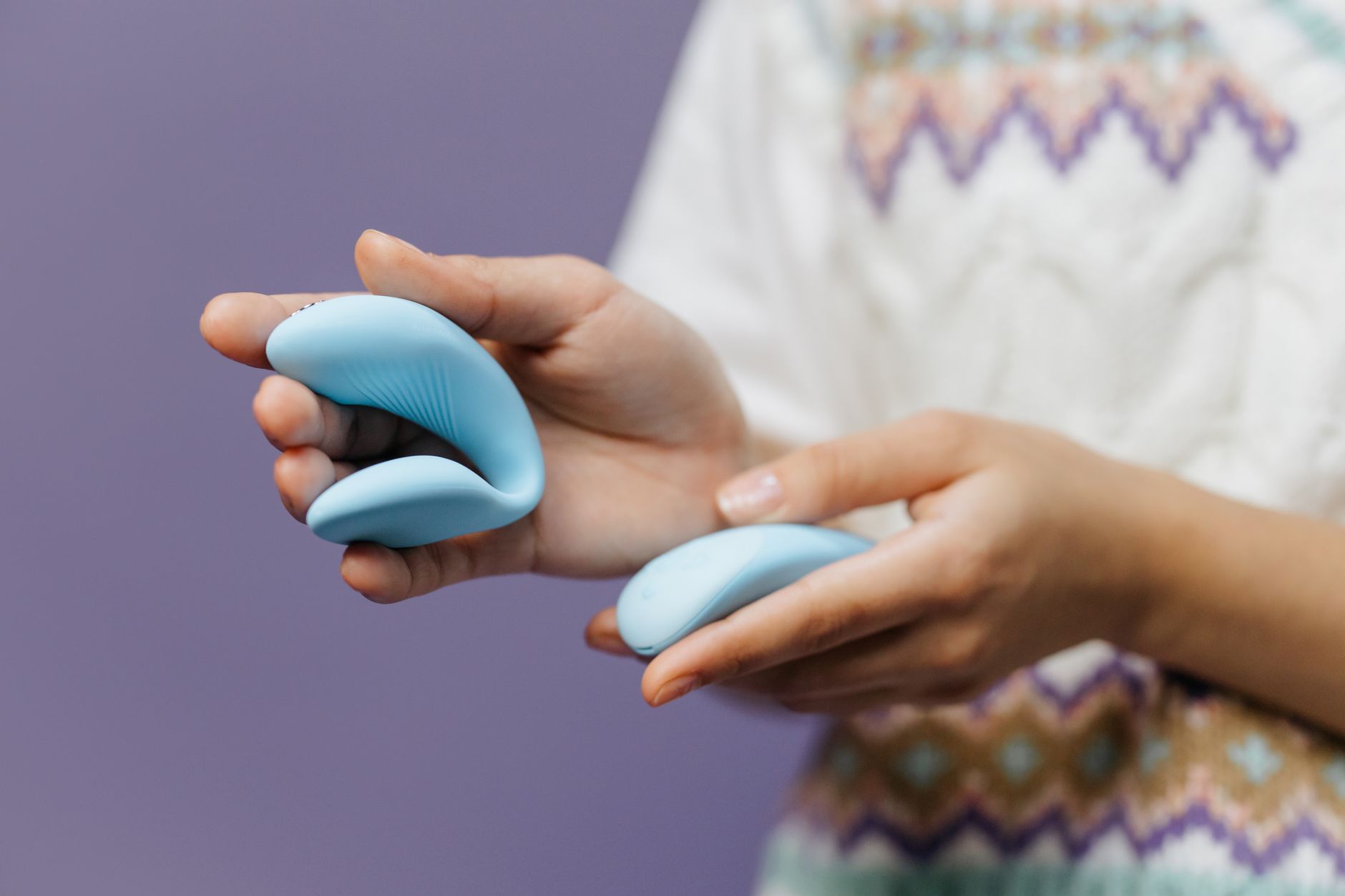
Photo by cottonbro studio on Pexels
Timing and lubrication matter more now
When sensation is muted, friction can feel uncomfortable if lubrication isn't present. Birth control often reduces natural lubrication, which compounds the sensation problem. Use a water-based lube before you even start. Not because there's anything wrong with your body, but because friction changes the entire experience. A little lubrication makes the Lemon Vibrator glide smoothly instead of dragging, which actually lets you feel more, not less.
Timing also shifts. You might need 20 to 30 minutes instead of 10. That sounds like a lot, but it's not punishment. It's permission to slow down, breathe, and let your body warm up properly. Many people find that longer sessions actually become more pleasurable over time because the mental load of "trying to come" finally lifts.
Consider the bigger picture: your pill and your body
Some birth control methods suppress sensation more aggressively than others. Certain progestin-only pills, implants, and IUDs cause more noticeable sensation changes than combined hormonal pills. If the flatness is really severe, talking to your prescriber about switching methods is worth doing. There's no reason to white-knuckle through diminished pleasure for years if another option exists.
But switching takes time, and you still deserve pleasure in the meantime. That's where your Lemon Vibrator strategy comes in. Using a clitoral vibrator like the Lemon while you're exploring whether to switch methods is a smart interim move. You stay connected to your body instead of waiting for external circumstances to change.
Build anticipation, lower expectations about timing
Here's something most guides don't say: when sensation is muted, the pressure to orgasm quickly can actually make things worse. Your nervous system tenses up, which further reduces blood flow. Instead, treat the Lemon Vibrator session as a pleasure practice, not a race to climax.
Set a timer for 20 or 30 minutes and commit to that window, orgasm or no orgasm. During that time, your only job is to notice sensation without judgment. Does the suction feel different at pattern 3 versus pattern 5? Does your arousal shift if you move the toy slowly instead of holding it still? What feels good today might not feel good next week, and that's fine. You're gathering data, not failing.
Many people find that once the "must orgasm" pressure drops, orgasms actually return more easily. Your nervous system has room to warm up without the weight of expectation crushing it.
If you have a partner
Honestly, the sex-with-a-partner piece gets messy when sensation is muted, because your partner is now in the equation. If you're using your Lemon Vibrator with a partner present, be explicit about what you need. "I'm on birth control that affects my sensation, so I need more time and higher intensity" isn't a reflection on your partner. It's information. Your partner needs to know so they don't take the longer arousal timeline personally.
Many couples find that incorporating a lemon clitoral vibrator into partnered sex actually deepens things, because the focus shifts from"are you done yet" to "what are we doing together." The vibrator becomes something you both use, not something you hide or feel self-conscious about.

Photo by SHVETS production on Pexels
When to revisit your birth control choice
Not everyone needs to switch. But if sensation flatness is significantly affecting your quality of life or your relationship, your prescriber should know. Bring data: "I notice sensation is significantly reduced, arousal takes much longer, and it's affecting my wellbeing." That's a legitimate reason to explore alternatives like non-hormonal IUDs, barrier methods, or different hormonal formulations.
Switching isn't instant, though. There's usually a 2-to-3-month adjustment period before your natural hormone cycle fully restores. During that transition, a Lemon Vibrator remains useful. Your body's responsiveness will gradually improve, but you'll still benefit from higher-intensity stimulation as it does.
The takeaway
Birth control reducing sensation is real, common, and manageable. A lemon sexual toy, when used with the right technique, higher intensity, adequate lubrication, and self-compassion, keeps you connected to pleasure while you figure out the bigger questions. You don't have to choose between contraception and sensation. You just have to adjust your approach and give your body what it actually needs to respond.
People also ask
Can birth control permanently damage sensation?
No. Sensation changes caused by hormonal birth control are reversible. Once you stop the contraceptive or switch methods, your body's responsiveness typically returns within two to three months as your natural hormone cycle restores. The clitoris itself hasn't changed. The neurological input has just been dampened by hormonal suppression.
Is it normal to need a stronger vibrator when on birth control?
Completely normal. Hormonal contraceptives reduce blood flow and tissue sensitivity, which means gentler stimulation might not register. Needing a higher pattern or a more intense tool like a clitoral vibrator is your body asking for what it needs, not a sign of dysfunction. The Lemon Vibrator's graduated patterns let you match intensity to your actual sensation level.
Does using a vibrator make sensation even more muted over time?
No. Vibrator use doesn't cause desensitization in the way some people fear. If anything, consistent, pleasurable stimulation over time can help maintain nerve sensitivity and blood flow. The key is matching intensity to your current baseline, not constantly escalating. Start at the pattern that feels good, not the highest one.
Should I take a break from my birth control to restore sensation?
That's between you and your prescriber, but taking breaks from hormonal contraceptives for sensation reasons isn't always practical or safe, depending on your method and contraceptive needs. A better first step is adjusting how you use pleasure tools, like incorporating a Lemon Vibrator with the right technique. If sensation loss is significantly impacting your wellbeing after three months of adaptation, then a conversation about switching methods becomes reasonable.
Can I use a lemon clitoral vibrator during my placebo week when sensation is naturally higher?
Absolutely. Many people find their responsive windows align with their placebo week or the few days before it. Intentionally planning solo exploration or partnered sex during that window can actually increase pleasure because your body's baseline sensitivity is slightly higher. Pair that with your Lemon Vibrator and you'll likely find more intense sensations.
What if sensation doesn't improve even with a stronger vibrator?
If you've been adapting your technique for three months and sensation is still flatlined, it's worth discussing with your doctor. Sometimes the hormone formulation or dosage of your birth control is just too aggressive for your individual chemistry. A lower-dose pill, a different progestin, or a non-hormonal method might restore sensation in ways that a vibrator, while helpful, can't solve alone. Your prescriber can help you explore options.
References
Gupta, N. P., Kumar, A., Sharma, S. K., & Srivastava, A. (2019). Impact of hormonal contraceptives on female sexual function: A prospective study. Journal of Human Reproductive Sciences, 12(2), 113-119.
Basson, R. (2001). Female sexual response: The role of drugs in the management of sexual dysfunction. Obstetrics and Gynecology, 98(3), 350-353.
Laan, E., & Lunsen, R. H. V. (1997). Hormones and sexuality in postmenopausal women: A psychophysiological study. Journal of Psychosomatic Obstetrics & Gynaecology, 18(2), 126-133.
If you're navigating pleasure with birth control, you're not alone. Reach out to your doctor or consider scheduling a conversation about what's working and what isn't. Contact us if you have questions about using Lemon Vibrator products for your specific situation.